


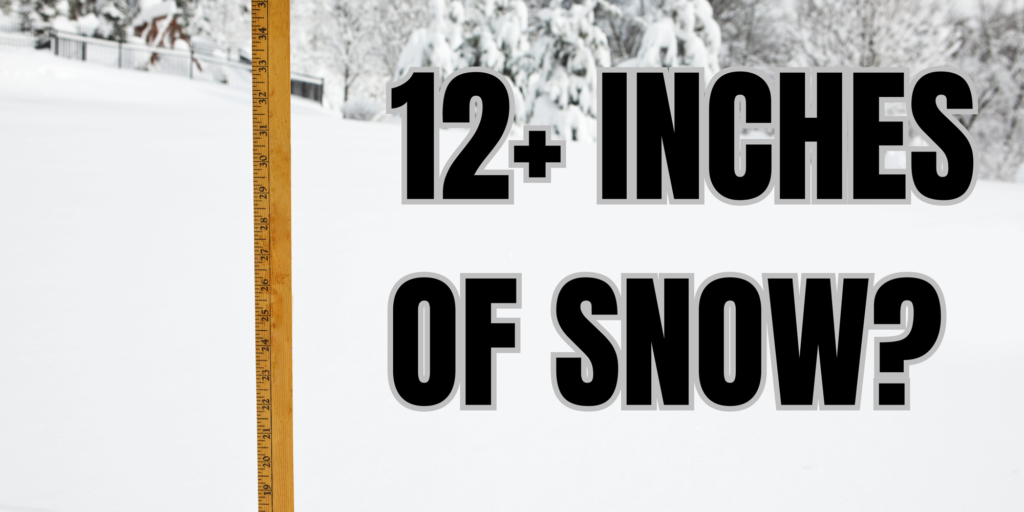
NORTH CAROLINA — Although March is typically associated with the transition to spring, historical weather data shows that significant snowstorms, including systems capable of producing around a foot of snow, have occurred in North Carolina during the month.
North Carolina’s climate varies widely from the mountains in the west to the coastal plain in the east. While snowfall is most common in the mountains, measurable snow is possible across much of the state during winter and early spring.
On average, cities such as Raleigh receive about 7 inches of snow per year, while higher elevations like Boone average significantly more, according to the National Weather Service. Snowfall can still occur in March, particularly during the early part of the month.
Several historical events demonstrate how large March snowstorms can develop in the state. One of the most notable occurred on March 1 and March 2, 1980, when a powerful low pressure system produced widespread snowfall of 12 to 18 inches across eastern North Carolina, with localized amounts exceeding two feet in some areas.
Other late season events have also brought substantial snowfall. During March 1960, multiple winter storms affected the state, with some areas receiving more than a foot of snow in a single system and unusually cold conditions persisting throughout the month.
Large March snowstorms in North Carolina typically occur when a strong low pressure system tracks across the southeastern United States or along the Atlantic coast.
These systems can pull moisture from the Gulf of Mexico or Atlantic Ocean while cold air remains in place over the region. When temperatures stay below freezing throughout the atmosphere, precipitation can fall as heavy snow instead of rain.
While snowfall totals vary widely from year to year and location to location, historical records show that North Carolina’s climate still allows for occasional late season winter storms. Past events demonstrate that under the right atmospheric conditions, a single storm in March can produce significant snowfall totals, including amounts approaching or exceeding one foot in parts of the state.