


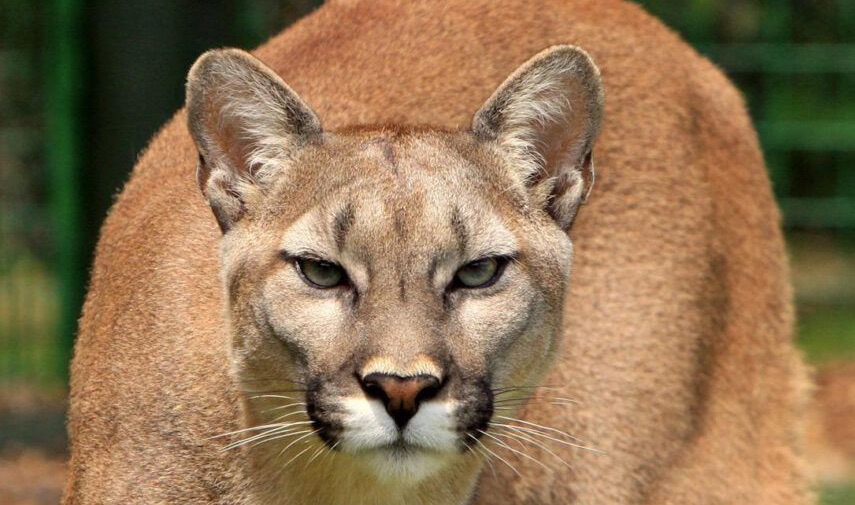
VIRGINIA — Reports of mountain lion sightings continue to be made across Virginia, despite wildlife officials maintaining that the species has been absent from the state for well over a century.
Mountain lions, also known as cougars, pumas or panthers, once inhabited Virginia’s mountains and forests. The last confirmed wild mountain lion in Virginia was killed in Washington County in 1882, according to the Virginia Department of Wildlife Resources (DWR). Since then, no breeding population has been documented in the Commonwealth.
Despite the species’ extirpation, reports of mountain lion sightings continue to surface throughout Virginia every year. The Virginia Department of Wildlife Resources reports that since 1970, 121 sightings have been identified as possible mountain lions, although none have been officially confirmed. Most reports have originated from Shenandoah National Park and the Bedford, Amherst and Nelson County region.
Sightings have also been reported from other parts of western and southwestern Virginia, including areas along the Blue Ridge Parkway and the Shenandoah Valley. According to DWR, many of these reports are investigated but ultimately lack the physical evidence necessary for confirmation.
Wildlife biologists say misidentification is one of the primary reasons mountain lion sightings continue to be reported. Large bobcats, domestic cats, coyotes and even dogs can appear much larger than they actually are when viewed from a distance, particularly in low-light conditions. DWR officials have stated that many photographs submitted as evidence have turned out to depict other animals rather than cougars.
The U.S. Fish and Wildlife Service has previously noted that occasional cougar sightings in the eastern United States could involve escaped captive animals or transient mountain lions dispersing from western populations. However, federal biologists have found no evidence of a reproducing eastern cougar population surviving in the region.
Interest in the species remains strong across Virginia, particularly in the Appalachian Mountains and Shenandoah Valley, where residents continue to share reports, photographs and trail camera images of animals they believe are mountain lions. Wildlife officials acknowledge the reports but maintain that no verified evidence has established the existence of a resident mountain lion population in the state.
Some wildlife experts believe cougars may eventually return naturally to parts of the eastern United States as western populations expand eastward. While confirmed cougar occurrences have been documented in states such as Tennessee and Kentucky, Virginia currently has no confirmed modern records of a wild breeding population.
The Virginia Department of Wildlife Resources encourages residents who believe they have seen a mountain lion to document the animal with photographs, video, tracks or other physical evidence and submit the information for review. Until such evidence is obtained, wildlife officials continue to regard mountain lions as extirpated from Virginia despite the continuing stream of reported sightings.