


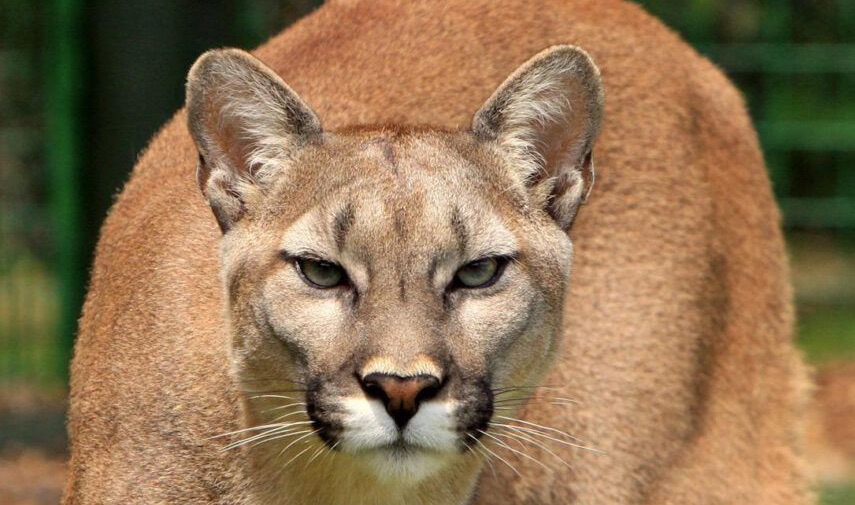
ILLINOIS — Reports of mountain lion sightings continue to be made across Illinois, despite wildlife officials saying the species has been absent as a resident breeding animal for more than a century.
Mountain lions, also known as cougars, pumas or panthers, once inhabited Illinois but disappeared from the state during the late 1800s as settlement expanded and large predators were hunted out of the region. Today, the Illinois Department of Natural Resources (IDNR) states that there is no known breeding population of mountain lions in Illinois. However, unlike many eastern states, Illinois has documented several confirmed cougar occurrences in recent decades.
Despite the lack of a resident population, reports of mountain lion sightings continue to come from throughout the state. Sightings have been reported in northern Illinois, central Illinois and southern Illinois, often involving large tan-colored cats observed crossing roads, moving through agricultural fields or appearing on trail cameras. Many reports are investigated by wildlife officials, though only a small number are confirmed.
Illinois has recorded several verified mountain lion incidents since the early 2000s. In 2002, a cougar was confirmed in Randolph County. Additional confirmed sightings followed in Mercer County, Jo Daviess County and other locations. Wildlife biologists believe these animals were transient males dispersing eastward from established populations in western states such as South Dakota and Nebraska.
One of the state’s most notable cougar incidents occurred in April 2008 when a mountain lion was struck and killed by a train in Chicago. DNA testing later linked the animal to the Black Hills region of South Dakota, demonstrating the species’ ability to travel hundreds of miles across the Midwest. At the time, it was one of the farthest east verified wild cougars recorded in modern history.
According to IDNR, mountain lions are capable of traveling great distances in search of territory. Young males, in particular, may disperse hundreds of miles from their birthplace. This behavior explains why individual cougars occasionally appear in Illinois even though the state lacks a breeding population.
Wildlife experts note that many reported mountain lion sightings ultimately prove to be cases of mistaken identity. Bobcats, which are native to Illinois and have expanded their range in recent decades, are often mistaken for cougars. Large domestic cats and coyotes also account for some reports investigated by wildlife officials.
Although Illinois has documented several confirmed mountain lion appearances, state wildlife officials emphasize that no evidence exists of a reproducing cougar population. No females with kittens or other indicators of breeding activity have been verified within the state.
The Illinois Department of Natural Resources encourages residents who believe they have seen a mountain lion to photograph the animal if possible and report the sighting. While transient cougars occasionally pass through Illinois, wildlife experts say the species remains extirpated as a resident breeding animal despite continuing reports from the public.