


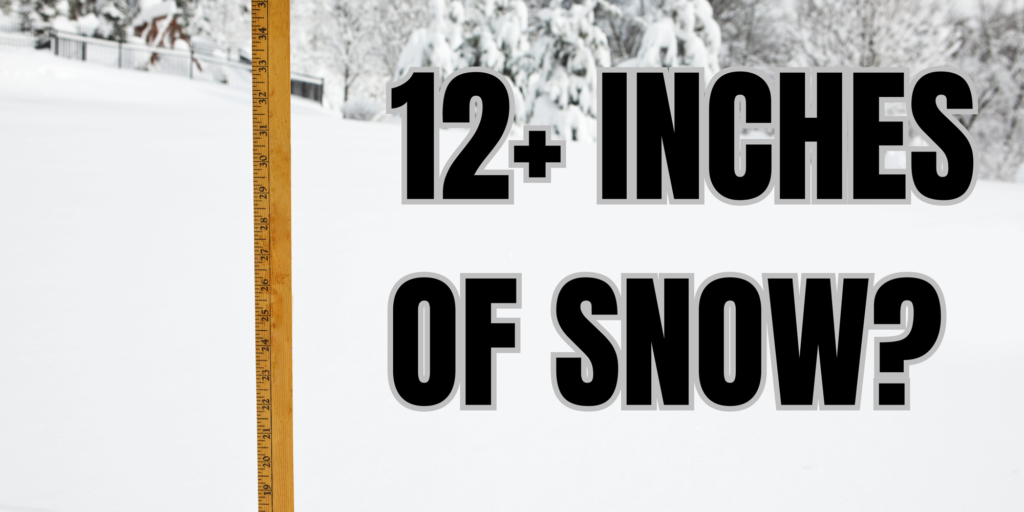
MICHIGAN — Although March marks the transition from winter to spring, historical weather data shows that significant snowstorms, including systems capable of producing around a foot of snow, are still possible in Michigan during the month.
Michigan’s location in the Great Lakes region makes it particularly susceptible to late season winter weather, according to the National Weather Service.
Cold air often remains in place across the Upper Midwest and Great Lakes well into early spring, and when strong storm systems move through the region, they can still produce heavy snowfall.
Climatological records show that many areas of Michigan continue to receive measurable snow in March.
Cities such as Grand Rapids, Detroit, and Lansing regularly record snowfall during the month, while northern Michigan and the Upper Peninsula often see much higher totals due to colder temperatures and lake effect snow. In some years, individual storms have produced snowfall totals of 10 to 12 inches or more in a single event.
Large March snowstorms in Michigan typically occur when a strong low pressure system tracks through the Midwest or across the Great Lakes. These systems can pull moisture northward from the Gulf of Mexico while cold air remains established across the region. When temperatures throughout the atmosphere remain below freezing, precipitation falls as snow rather than rain.
In addition to large storm systems, the Great Lakes themselves can contribute to snowfall through lake effect processes. Cold air moving over the relatively warmer waters of the lakes can generate bands of heavy snow, especially in western and northern parts of the state.
While snowfall amounts vary each year, historical weather patterns show that Michigan’s climate still supports the possibility of significant late season snowstorms. Under the right atmospheric conditions, a single system in March can produce snowfall totals approaching or exceeding one foot in parts of the state.