

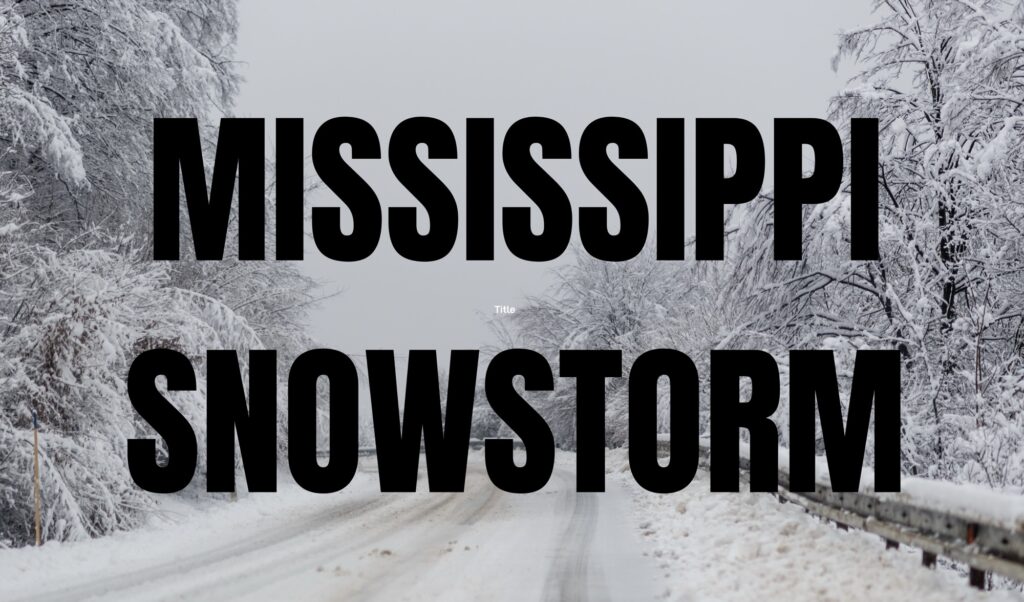
MISSISSIPPI — The National Weather Service in Jackson, Mississippi has issued a Winter Storm Watch for much of the state as a significant winter weather system is expected to impact the region late this week into the weekend. Forecasters are particularly focused on the potential for freezing rain and ice, which could create widespread travel hazards and infrastructure impacts.
Winter Storm Watch Details
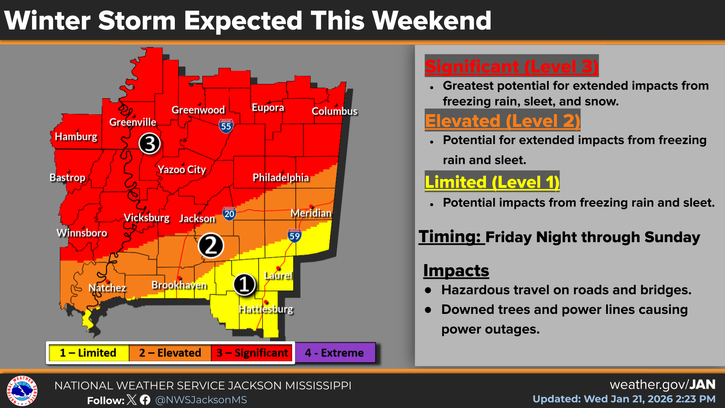
The Winter Storm Watch is expected to be in effect from Friday afternoon through Sunday for large portions of Mississippi. Meteorological products indicate that a mix of precipitation — including rain, freezing rain, sleet and possibly snow — could develop as colder air filters into the region, with ice accumulations possible where temperatures fall below freezing.
Some forecast guidance notes ice accumulation of up to a tenth of an inch or more is possible in spots, especially Saturday into Saturday night, with freezing rain likely in areas where surface temperatures remain cold enough.
Ice Impact Concerns
Forecasters warn that even relatively light ice accretions can create extremely hazardous travel conditions, as frost and ice bind to bridges, overpasses, roads, sidewalks and vehicles.
More critically, ice buildup on trees and power infrastructure could lead to downed limbs and snapped lines, increasing the risk of widespread power outages across central and northern parts of the state. Past historical ice storms in the region have caused major outages and extensive damage when ice weighed down trees and utility lines.
Public Preparedness Advice
Residents are urged to:
- Monitor updates from the National Weather Service and local emergency officials.
- Prepare for hazardous travel and potential disruptions to power and services.
- Stock emergency supplies at home and in vehicles, including food, water, flashlights and blankets.
State agencies, including the Mississippi Emergency Management Agency (MEMA), are closely coordinating preparations for the storm, emphasizing that freezing rain and sub-freezing temperatures over multiple days can amplify impacts, from travel hazards to infrastructure strain.