


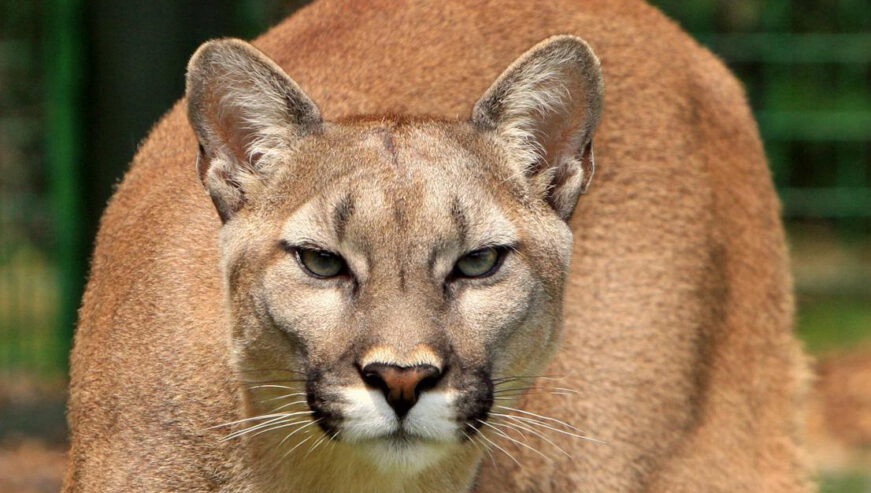
INDIANA — The idea of mountain lions (also called cougars, pumas, or Puma concolor) returning to Indiana has intrigued residents and wildlife observers, but state wildlife agencies and scientific evidence paint a clear picture: while individual animals may wander through the state on rare occasions, there is no established, breeding population of mountain lions in Indiana today.
Historical Context
Mountain lions were once native across much of North America, including what is now Indiana. They were extirpated — meaning completely eliminated locally — in the state in the late 1800s due to unregulated hunting, habitat loss and development.
Since that time, no self-sustaining population has ever been documented in the state, and there is no evidence that the species has recolonized on its own in a way that would qualify as a true return.
Current Status of Mountain Lions in Indiana
According to the Indiana Department of Natural Resources (DNR), the likelihood of encountering a mountain lion in Indiana remains remote. The agency states there is:
- No known breeding population of mountain lions in the state.
- Occasional reports or sightings with inconclusive evidence.
- Most large cat sightings turn out to be bobcats, dogs, or misidentifications rather than cougars.
Indiana’s DNR actively investigates reported sightings, but criteria for confirmation include clear photographic or physical evidence — which has been lacking in most claims.
Transient Individuals, Not a Population
While Indiana does not have resident mountain lions, individual animals from western states sometimes wander through or into the eastern U.S. Wildlife biologists track cases in nearby states where young male cougars have migrated long distances in search of territory. These animals can cover hundreds of miles, occasionally turning up far from any core population.
For example, in Illinois, biologists confirmed occasional mountain lion sightings and documented animals that had moved through the region. However, even there no breeding population has become established.
Such wandering behavior occasionally leads to unconfirmed or possible sightings in Indiana, but these are isolated events and do not indicate a sustainable population returning to the state.
What Would It Take for Mountain Lions to Return?
For mountain lions to truly “return” to Indiana in an ecological sense — meaning a locally reproducing, self-sustaining population — several factors would need to align:
1. Suitable Habitat:
Mountain lions require large, contiguous tracts of forested or wild land to support territories and prey. Indiana’s landscape is heavily fragmented by agriculture and development, limiting suitable habitat connectivity.
2. Reproductive Pairs or Groups:
A breeding population requires more than isolated individuals; multiple animals of both sexes would need to survive and reproduce. Current observations do not show evidence of this happening naturally in Indiana.
3. Reduced Human Risk and Conflict:
Unlike western states with large public wildlands, Indiana’s higher human population density and land use patterns pose challenges for large predator coexistence, even in areas of forest or public land. Wildlife managers would need to address safety, livestock protection, and public awareness to consider longer-term presence.
Public Interest and Misperceptions
Over the years, cameras and anecdotal reports have fueled speculation about mountain lions in Indiana, but expert analysis consistently emphasizes the rarity of verified sightings and the high likelihood that misidentified animals are bobcats or other species.
Occasionally, social media posts or local forum threads spread claims about alleged mountain lion sightings. These are typically unconfirmed and not regarded as scientific evidence by wildlife professionals.
Conclusion
At present, the scientific and wildlife management consensus is clear: mountain lions are not established in Indiana, and while transient individuals could appear sporadically, there is no evidence of a resident or breeding population.
Any future possibility of mountain lion recovery in the state would depend on significant ecological changes and long-distance migration patterns, rather than a simple or near-term natural return. Wildlife officials continue to monitor reports, but Indiana remains outside the core range of this species based on all available data.