


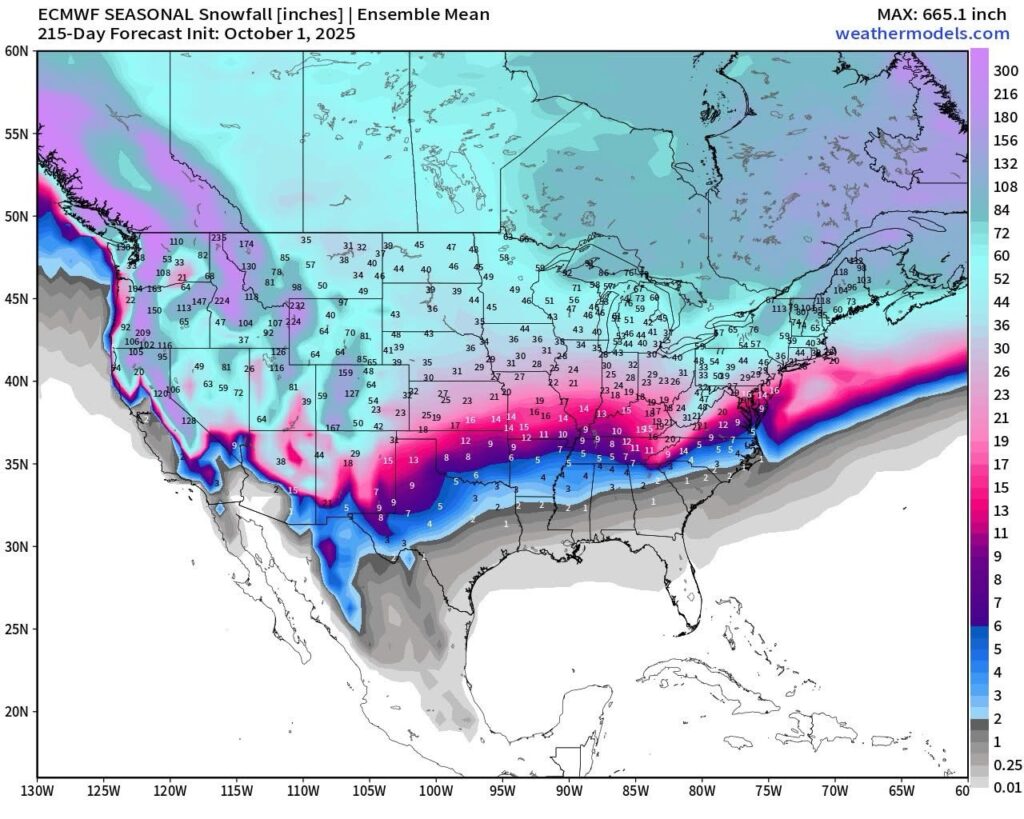
KENTUCKY — A long-range European weather model suggests Kentucky could be in for a colder and snowier winter than usual during the 2025–2026 season.
The forecast, based on the ECMWF seasonal model issued October 1, projects heavier-than-normal snowfall across much of the Ohio Valley, including northern and eastern parts of Kentucky.
While the map primarily highlights Ohio, surrounding regions such as Kentucky are expected to experience similar winter weather patterns if the model’s outlook holds true.
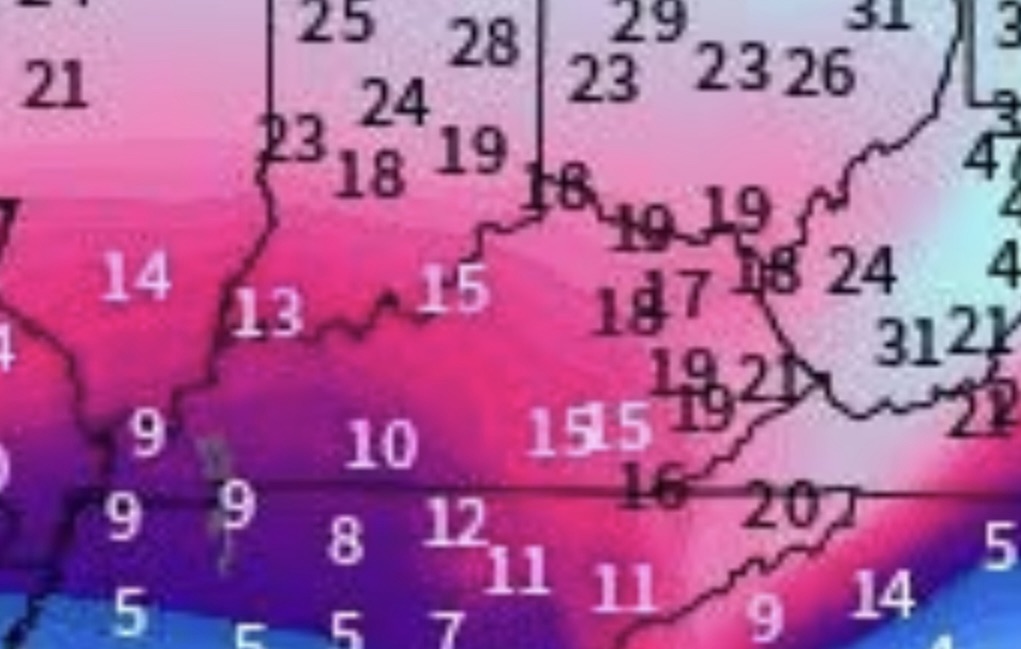
The ECMWF ensemble mean forecast indicates conditions that could lead to increased storm activity and more frequent snowfall events through late winter.
Historically, Kentucky receives far less snow than its northern neighbors. Statewide averages typically range between 5 and 10 inches of snow per season, though amounts vary widely depending on location. Western Kentucky, including areas like Paducah, averages around 9 inches annually, according to the National Weather Service.
Central Kentucky, including Louisville and Lexington, generally sees 10 to 13 inches per year, while eastern Kentucky’s higher elevations can record 15 to 24 inches in some winters. Southern portions of the state, such as Somerset and Bowling Green, usually see closer to 5 inches or less.
If the ECMWF outlook proves accurate, Kentucky could experience totals that approach or exceed the upper end of these averages, particularly in central and eastern regions. That could mean a more active winter season with increased potential for travel disruptions, school delays, and utility challenges.
Meteorologists caution that long-range forecasts are designed to show general trends rather than precise predictions.
However, the data points toward a pattern favoring colder air outbreaks and enhanced storm systems across the Ohio Valley—factors that often bring more snow to Kentucky.
For now, residents are encouraged to prepare early for the possibility of a snowier-than-normal winter, ensuring vehicles, homes, and emergency supplies are ready before the season begins.