


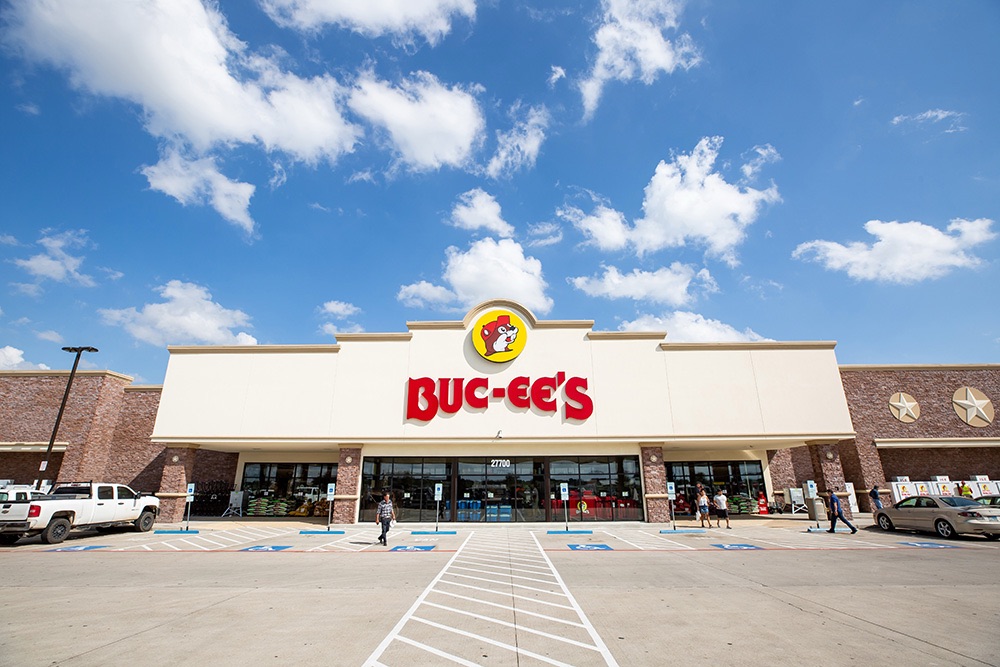
MICHIGAN — Michigan has several advantages that make it a plausible candidate for a Buc-ee’s location: major interstate corridors, strong tourism (especially around the Great Lakes), and a steady flow of long-distance travel.
That said, Buc-ee’s doesn’t open just any gas station — it opens destination travel centers that require large sites and infrastructure support. For Michigan to land one, several key factors would need to align.
What Buc-ee’s looks for
Buc-ee’s builds travel centers on a scale well above typical convenience stores, often exceeding 70,000 square feet of retail space with 100+ fuel pumps and large parking areas. To support this footprint, a location needs:
1. A very large site near a major interstate interchange
The land needs to be flat, developable, and close enough to ramps that travelers can easily enter and exit without impacting local streets.
2. High and consistent traffic volumes
Buc-ee’s targets corridors with strong long-distance travel — not just local commuter traffic — because its business model draws visitors who travel for miles to stop there.
3. Upgraded roads and utilities
Because of the size and traffic generation, communities usually must agree to widening ramps, improving nearby intersections, handling stormwater, and extending utilities. In several markets, projects have stalled when interchange improvements were not planned or funded.
4. Favorable zoning and community support
The sheer scale of Buc-ee’s centers can trigger local debate. Clear zoning and political backing smooth project timelines.
Why Michigan can work
Michigan’s interstate network — including I-75, I-94, I-69, I-96, and I-75 — carries heavy volumes of both regional travel and long-distance traffic. Add substantial tourism traffic in summer, and you get corridors where Buc-ee’s could find the traffic counts it wants.
However, Michigan also has geographic constraints: the Upper Peninsula has fewer big interchanges with developable land, and much of the Lower Peninsula’s best interstate land is already built up. That narrows the practical options.
Most logical locations in Michigan
Below are corridors and general areas where Bac-ee’s might succeed, based on traffic, land availability, and interchange potential.
1. I-94 near Battle Creek / Kalamazoo
This stretch of I-94 connects Chicago, Detroit, and points east. Battle Creek and Kalamazoo sit near major interchanges with room for development, and traffic levels are high year-round. A large site here could capture both long-distance and regional travelers.
2. I-75 corridor (Metro Detroit to Flint)
The section between Detroit and Flint — especially near Lapeer or Flint-area interchanges — is a strong candidate. It’s a busy north-south interstate with heavy year-round travel and locations where large parcels could be assembled.
3. I-96 / I-94 around Jackson
Jackson sits on the crossroads of I-94 and I-96, making it a natural travel stop for people heading in almost any major direction across southern Michigan. Sites outside downtown with good interstate access could accommodate Buc-ee’s scale.
4. I-69 corridor near Lansing / Port Huron traffic
Near Lansing and beyond toward Port Huron, I-69 carries a significant mix of truck and passenger travel. Interchanges here often have larger parcels just outside urban cores — good candidates for large travel centers.
5. I-75 north of Troy / Auburn Hills
Closer to the Detroit metro but outside denser development, this area sees heavy traffic from Chicago-to-Toronto travelers on the Ambassador Bridge / Blue Water Bridge routes. A Buc-ee’s here would need careful siting to avoid congestion but could thrive with the right access.
6. Near the Michigan/Ohio border on I-75
This is another high-volume long-distance corridor. If a community could assemble land and support the necessary infrastructure upgrades, this would be attractive to travelers heading between the Midwest and the southeastern U.S.
What won’t be easy
- Upper Peninsula sites: While popular in summer, the U.P. has limited interchange density and fewer large, flat parcels — making Buc-ee’s typical development footprint harder to place.
- Close-in urban interchanges: Downtown sites near Detroit, Grand Rapids, or Ann Arbor simply don’t have the acreage needed without costly land assembly and road work.
The bottom line
Michigan has the traffic, interstates, and tourism demand that could support a Buc-ee’s travel center — but it also has infrastructure costs and land challenges that communities must solve first.
The most logical locations would be along busy interstate corridors with strong long-distance travel (I-94, I-75, I-96, I-69), at interchanges where large developable parcels exist and where local leaders are willing to plan and pay for road improvements before construction. If those conditions line up, Michigan could be next on Buc-ee’s expansion map.