


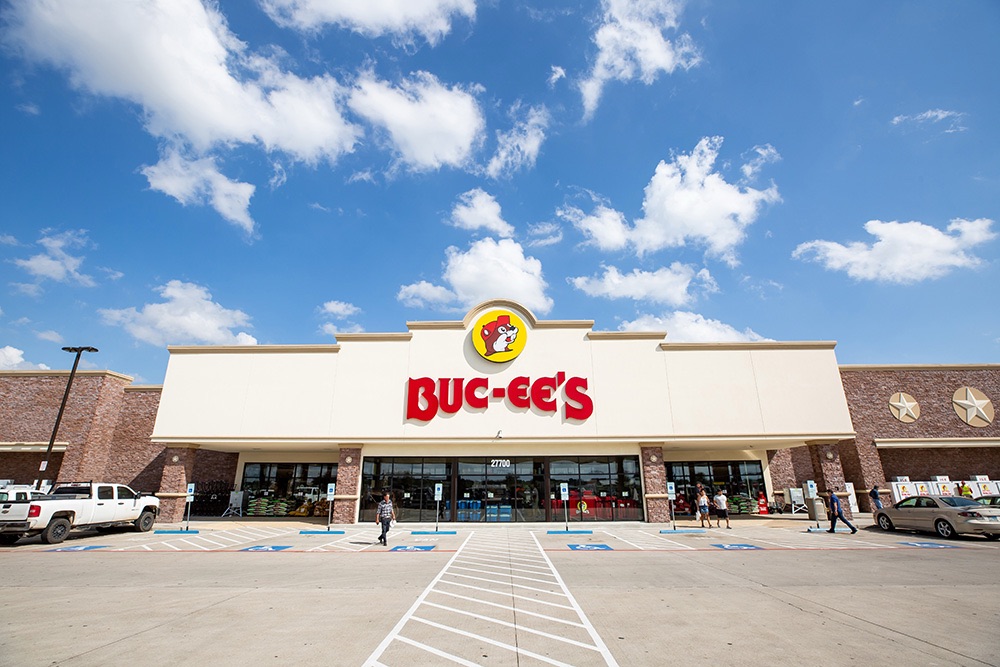
ILLINOIS — Illinois has the highways, the population and the year-round travel demand to support a Buc-ee’s.
But landing the Texas-based travel center chain would likely come down to a familiar set of issues seen in other proposed Midwestern projects: finding a large site with interstate access, proving the traffic will support a “destination” convenience store, and securing expensive road upgrades before construction can begin.
Buc-ee’s stores are built on a scale far beyond the typical gas station. Many recent and planned locations are roughly 74,000 square feet and pair that with around 100–120 fuel pumps and large parking fields. That size brings jobs and visitor volume, but it also brings major transportation impacts that local governments have to be ready to manage.
The core requirement: a big site at the right interchange
Buc-ee’s tends to choose locations directly off major interstates, often near high-volume crossings and travel corridors. A key lesson from Wisconsin is that even when a company is willing to build, the project can stall if the interchange and nearby roads can’t handle the added traffic.
In DeForest, Wisconsin, local planning documents and public updates emphasized that Buc-ee’s wanted high confidence that interchange improvements would be completed before site construction because traffic volumes and operations depend on it. Local reporting has also tied the project’s timeline to the need for significant interchange work and outside funding.
That same dynamic would apply in Illinois. The most realistic sites are those where:
- Land is available for a large-format development (often dozens of acres once pumps, parking, stormwater and building footprint are considered).
- Zoning allows a major travel center and heavy retail/food service use, or can be changed without years of legal fights.
- Interchange geometry and local roads can be expanded—turn lanes, signals, ramp improvements, and sometimes full redesigns.
- Utilities and services (water, sewer, electric) can support a facility that operates 24/7 and serves very high customer volumes.
Truck policy and safety considerations
Another operational factor is that Buc-ee’s has been widely reported to ban 18-wheelers at its sites, positioning stores as safer and more comfortable for passenger vehicles and families. That matters in Illinois because many prime interstate locations are also prime trucking locations—meaning a community would need to decide whether it wants a family-oriented “travel destination” stop, a traditional truck stop model, or a mix of both nearby.
The Illinois advantage: unmatched interstate network
Illinois is one of the country’s key freight and travel crossroads, with major Interstate routes like I-55, I-57, I-80, I-90, I-94, I-39, I-64, I-70, I-74 and I-88 forming a dense grid of long-distance travel paths. The Illinois Department of Transportation also publishes traffic-count and annual average daily traffic resources that communities typically use to justify (or challenge) interchange upgrades and large roadside developments.
In other words: Illinois can work. The question is where the numbers, the land and the politics line up.